Psalm 8 (Psalms of Praise)

Psalm 8 (Psalms of Praise) – Jul 19th, 2026
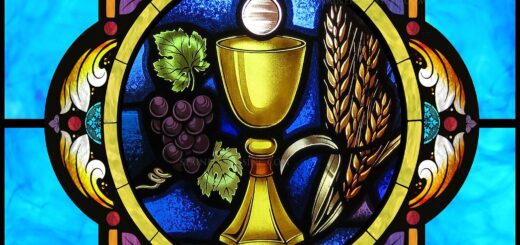
Have you ever watched a foreign film with English subtitles? Sometimes they seem to make sense; other times we may hear a sentence or two in the original language and yet the subtitles show just one or two words. At times like those, I wonder what and why something was omitted. Psalm 8 is like that. For reasons that I do not fully understand, the first five Hebrew words in Psalm 8 are completely left out of many of our English Bible translations: lam·naṣ·ṣê·aḥ ‘al- hag-git-tîṯ miz-mō-wr lə-ḏā-wiḏ. “For the one directing according to gittith, a Psalm of David.” The authorship of David is straightforward enough. But what about “according to gittith”? Old Testament scholar Walter Brueggemann suggests that gittith is likely derived from Gath, a Philistine city, and signifies “a rhythm, a song or a dance patterned after the work of grape treaders in the winepress.” The region surrounding Gath has always been highly suitable for cultivating grapevines, and archaeological excavations in the area have uncovered numerous ancient, rock-cut winepresses used to stomp grapes and collect juice for fermentation.
This all reminds me of a personal story. On one of our visits to Peter and Alex a couple of years ago, we spent a couple of weeks in the Republic of Georgia. Everywhere we went in that country, locals spoke very proudly and passionately about their local wines, often mentioning Georgia’s 8000-year-old wine tradition. We could easily spot very large grapevine trunks on every property, no matter how ramshackle the house. One day we visited an ancient cave city carved out of rock high above a river, Uplistsikhe, which was inhabited from 1000 BCE to about 1400 CE. At its peak, about 20,000 people lived in this bustling trade hub on the Silk Road. As we made our way through chambers and passageways, we noticed many wine vats carved out of the rock. The earliest winepresses were human feet, reminding me of Justin Timberlake’s 2016 song, “I got that sunshine in my pocket, got that good soul in my feet … I can’t stop the feelin’, so just dance, dance, dance, come on!”
Psalm 104:14-15 tells us that “You [God] cause … plants [to grow] for people to use, to bring forth … wine to gladden the human heart.” The grape treaders in both Gath and the Republic of Georgia eagerly danced and stomped and sang in the winepress, to produce the wine that brought them gladness and for which others journeyed from afar to obtain. This is a picture of God’s shalom – flourishing, wholeness, and delight – and pictures how Psalm 8 is meant to be sung! And second century bishop and apologist Irenaeus famously said, “The glory of God is a human being fully alive.” It brings glory to God to live fully in the hope of the shalom of God for which we were created!
Praising God with dancing, stomping, and singing brings glory to God and gladness together!
So, what is Psalm 8 about, anyway, that we would dance, stomp, and sing it? Old Testament theologian James Limburg dubs Psalm 8 “a psalm for stargazers.” I suspect that only an unfortunate few of us habitually wander outside to contemplate the night sky. An estimated 83% of the world’s population lives under light-polluted skies, interrupting our circadian rhythms, disturbing ecosystems, and obscuring our view of the celestial sphere, the vault of heaven. It seems likely that the psalmist spent a lot of time outside at night, gazing up at the heavenly wonders. Filled with awe, the psalmist bursts out with praise to the One who created it all:
“O Lord, our Sovereign, how majestic is your name in all the earth!” (Psalm 8:1)
Between the time when David penned this Psalm 3000 years ago and now, many others have sought to describe this same kind of awe and wonder:
- Greek philosopher Plato: “Astronomy compels the soul to look upwards and leads us from this world to another.”
- Roman statesman Cicero: “The contemplation of the celestial things will make a man both speak and think more magnificently and sublimely when he descends to human affairs.”
- American poet George Moses Horton: “Creation fires my tongue! Nature thy anthems raise; and spread the universal song of thy Creator’s praise!”
- Dutch artist Vincent van Gogh: “For my part I know nothing with any certainty, but the sight of the stars makes me dream.”
- English physicist and musician Brian Cox: “Standing on the shoulders of giants, we peer into the darkness with eyes opened not in fear but in wonder.”
- Comic strip characters Calvin and Hobbes: “If people sat outside and looked at the stars each night, I’ll bet they’d live a lot differently … when you look into infinity, you realize that there are more important things than what people do all day.”
Let’s read the next portion, Psalm 8:2-4 – “You have set your glory above the heavens. Out of the mouths of babes and infants you have founded a bulwark because of your foes, to silence the enemy and the avenger. When I look at your heavens, the work of your fingers, the moon and the stars that you have established; what are human beings that you are mindful of them, mortals that you care for them?”
We experience God’s glory in creation. What are human beings?
Biblical scholars Peter Craigie & Marvin Tate explain that “enemies symbolize human strength … [and] enemies of God … do not recognize the name of God or the revelation that came through that name, for if they had … they would have desisted from their enmity. Babes, on the other hand, symbolize human weakness and humility, but … when they take the name of God on their lips … they acknowledge, and in some sense understand, the majesty and revelation of God … [and this quiets] the opposition of enemies.”
It’s interesting that, in drawing a comparison between the grandeur and glory of God’s creation and the smallness and insignificance of human beings, the psalmist does not ask, “Who are human beings?” Old Testament Professor Rolf A. Jacobson points out that the poet instead “uses a pronoun normally reserved for inanimate objects. The resulting connotation is derisive: What are measly human beings …?”
The answer comes at the very center of the poem, in Psalm 8:5 – “Yet you have made them a little lower than God, and crowned them with glory and honor.”
We are simultaneously made of dust and marked by God.
This is the central paradox at the heart of our identity as humans. Jacobson paints a helpful picture: “we are of creation, of small account, bearing the dust of the earth in our bodies and the nature of the animals in our very beings. Yet we are of heaven, carrying our maker’s mark on our souls and sharing in the likeness and image of God.” Psalm 8 stands in beautiful harmony with Genesis 1:27-28 – “God created humankind in his image, in the image of God he created them; male and female he created them. God blessed them, and God said to them, ‘Be fruitful and multiply, and fill the earth and subdue it; and have dominion over the fish of the sea and over the birds of the air and over every living thing that moves upon the earth.’”
It’s important to point out that although the NRSV states that we have been made a little lower than God, in many English translations the text reads “a little lower than the angels” or “the heavenly beings.” Brueggemann comments on these translation choices: “Humankind has honor and glory in relation to the angels, not unlike God. Humankind has dominion over the other creatures, not unlike God. Humankind is not unlike God.” In any case, it is clear that the king of all Creation has chosen to crown humanity with glory and honor! Psalm 8’s answer to the question, “What are human beings?” stands in sharp contrast to the prevailing Mesopotamian worldview at the time. Biblical scholars John H. Walton, Victor H. Matthews, and Mark W. Chavalas explain that “humans were made to be servants to deities, who had no interest in hard labor … human dignity was achieved through the idea that the gods needed them.”
Psalm 8 creates a constant expectation that God will bring order to a disordered world by means of humble and insignificant humans. Psalm 8 also looks forward to the fulfillment of this vision, the hope of shalom, when everything will be as it should be, in wholeness, flourishing, and delight.
Let’s read the next portion, Psalm 8:6-8 – “You have given them dominion over the works of your hands; you have put all things under their feet, all sheep and oxen, and also the beasts of the field, the birds of the air, and the fish of the sea, whatever passes along the paths of the seas.”
Notice that in this portion, the psalmist emphasizes God’s actions. The key to human dignity and value is not what we can do for ourselves but for what God has done for us. It is God whom we are to worship. Revelation 4:11 – “You are worthy, our Lord and God, to receive glory and honor and power, for you created all things, and by your will they existed and were created.” And it is God who gives us authority to rule over God’s creation. “You have given them dominion over the works of your hands; you have put all things under their feet.”
God calls us to the responsibility of royalty.
I want to offer a word of caution about the word “dominion,” which unfortunately has collected some baggage through a misunderstanding of its meaning. Dominion does not mean that human beings have the right to do whatever we want with creation. All things have been put under our feet not so that we can trample all over them but so that we can tend and care for them. Being crowned as royalty tells us that we are being called to a higher standard of responsibility, for the sake of justice and righteousness. Psalm 72:1-2 describes this royal mandate – “Give the king your justice, O God, and your righteousness to a king’s son. May he judge your people with righteousness, and your poor with justice.” Jacobson explains the connection: “human beings are celebrated as the royalty of God’s creation, who have been commanded by God to govern nature in the same responsible way that kings are commanded to govern nations.” Dominion over creation is not reckless, inconsiderate control but responsible, protective stewardship. Dominion over creation must always go hand in hand with adoration of the Creator. We must avoid the temptation to relinquish our responsibility to rule. And we must not seek to receive praise or loyalty from any part of creation. God calls us to exercise responsible, protective stewardship and to give our praise and loyalty to God.
I think it is beautiful that Psalm 8 doesn’t just tell us that God cares for us. It shows us God’s care by the incredible extent to which God has given us this responsibility of royalty in creation. As we all know, children need to be helped and provided for. And it is important that children be given the opportunity to do things for themselves and to contribute to the household. When our daughter Cascade was about two years old, she took great delight in helping me with laundry. She would pick up a washcloth or hand towel and vigorously shake it, as she had seen me do. Next she would throw it down into the basket. She did the part she understood with such passion and pride. Eventually she learned how to fold them, too! Our oldest granddaughter took great delight in helping to set the table, even before she was tall enough to see over the edge. What she could do, she did with passion and pride, reaching up to lay a fork at each place and setting out small plates one at a time. We are all God’s beloved children. What joy it brings family, friends, and teachers alike to see children bloom and grow as they practice and refine new skills. How much more does God delight in us, God’s beloved children who bear God’s image and likeness! Isn’t it beautiful that God values us so much that we have been given royal responsibility with God’s beloved creation?
Before we get to the last verse of this psalm, I want to share some ways in which Psalm 8 has been an influencer. There are many more, but here are four ways in which we encounter Psalm 8.
We encounter Psalm 8 in the early church. In the pages of the New Testament we see how the early church read in Psalm 8 the dominion of Jesus Christ, in his resurrection and exaltation:
1 Corinthians 15:27a – “‘God has put all things in subjection under [Christ’s] feet.’”
Ephesians 1:20-23 – “[God] raised [Christ] from the dead and seated him at his right hand in the heavenly places, far above all rule and authority and power and dominion, and above every name that is named, not only in this age but also in the age to come. And he has put all things under his feet and has made him the head over all things for the church, which is his body, the fullness of him who fills all in all.”
The early church also read in Psalm 8 the role of humanity’s dominion in the world:
Hebrews 2:6-9 – “Someone has testified somewhere, ‘What are human beings that you are mindful of them, or mortals, that you care for them? You have made them for a little while lower than the angels; you have crowned them with glory and honor, subjecting all things under their feet.’ Now in subjecting all things to them, God left nothing outside their control. As it is, we do not yet see everything in subjection to them, but we do see Jesus, who for a little while was made lower than the angels, now crowned with glory and honor because of the suffering of death, so that by the grace of God he might taste death for everyone.”
Notice that the Hebrews passage argues that because Jesus has been crowned with glory and honor, humanity has also been crowned with glory and honor. And humanity has been given the royal responsibility of responsible, protective stewardship over all of creation, just as Psalm 8 describes.
C. S. Lewis notes that “When one looks up at the sky, and all the stars which are His work, it seems strange that He should be concerned at all with such things as man. Yet in fact, though He has made us inferior to the celestial beings, He has, down here on earth, given us extraordinary honour – made us lords of all the other creatures.” Lewis encourages us to remember that, as the Hebrews passage itself states, we do not yet see everything in subjection to humanity: “Man is often killed, and still more often defeated, by beasts, poisonous vegetables, weather, earthquakes, etc.” However, in the fullness of time, at the last day, all things will be subjected to Christ. Lewis encourages us accept both the divinity and humanity of Christ by considering the Resurrection and the Ascension simultaneously as great acts of God and as the triumph of humanity.
We encounter Psalm 8 in literature. Here are two examples:
Pascal’s 1670 Pensées (1670): “what is man in nature? A Nothing in comparison with the Infinite, an All in comparison with the Nothing, a mean between nothing and everything.”
John Milton’s 1667 Paradise Lost: “Creatures of other mould, earth-born perhaps, not Spirits, yet to heav’nly Spirits bright little inferior; whom my thoughts pursue with wonder, and could love, so lively shines in them Divine resemblance, and such grace the hand that formd them on thir shape hath pourd.”
We encounter Psalm 8 in music. Countless compositions refer to Psalm 8, ranging from Bach’s 1724 St. John Passion to the 1885 hymn “How Great Thou Art” to Michael W. Smith’s 1982 “How Majestic Is Your Name” to Phil Wickham’s 2025 “Hallé.”
We encounter Psalm 8 in space exploration. When the Apollo 11 spacecraft journeyed to the moon in 1969, the astronauts left a small disc on the Moon containing goodwill messages from the leaders of 73 nations. Many described the haunting beauty and wonder of the universe and the achievements and adventurousness of space pioneers. The Sovereign of the Vatican City State, Pope Paul VI, chose as his goodwill message the full text of Psalm 8.
Psalm 8 invites us to wonder at God’s glory in creation. Psalm 8 invites us to wonder that we are simultaneously made of dust and marked by God. God calls us to the responsibility of royalty. God calls us to exercise responsible, protective stewardship and to give our praise and loyalty to God.
As we close, let’s listen in on a brief conversation between Caspian and Aslan in C. S. Lewis’s Prince Caspian from The Chronicles of Narnia:
“Caspian said, ‘I was wishing that I came of a more honourable lineage.’ ‘You come of the Lord Adam and the Lady Eve,’ said Aslan. ‘And that is both honour enough to erect the head of the poorest beggar, and shame enough to bow the shoulders of the greatest emperor on earth. Be content.’ Caspian bowed.”
We can be content and bow before the King of Kings and the Lord of Lords.
“O Lord, our Sovereign, how majestic is your name in all the earth!”