Psalm 65 (Psalms of Praise)
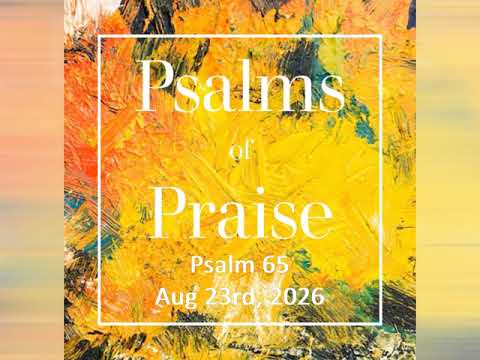
Psalm 65 (Psalms of Praise) – Aug 23rd, 2026
I lived eighteen of the first 25 years of my life in Australia. On many occasions, especially as an older adult thinking back over earlier years, I’ve thought that if we’d known how good we had it, we would have paid more attention and been more grateful. I feel that way about my Aussie upbringing. I am convinced that every place on earth has its own special beauty, and even in places I’ve visited where I did not expect to encounter as much beauty, like deserts or deep winters, I’ve been wowed by the beauty of creation every single time. Australia is truly incredible, y’all!
On our recent trip there, I couldn’t help but notice both the sights and sounds of many gorgeous birds every time we stepped outside. To give you some perspective, the continental US has 15 species of birds that are endemic to here, meaning that they are found nowhere else on earth. Australia has about 380 endemic bird species, including bowerbirds and budgies; lyrebirds and lorikeets; cockatoos and cockatiels; emus and laughing kookaburras; parrots, rosellas, and royal penguins. Australia’s plant life evokes deep memories in me, because I spent long hours out-of-doors lost in exploration and wonder all throughout my childhood. More than 90% of Australia’s 24,000 native plant species are found nowhere else on earth, including emu bushes and eucalypts; wattles and waratahs; banksias and bottlebrush; macadamias and desert peas; paperbark trees and kangaroo paws. And, of course, everyone loves the more well-known Aussie animals! 80% to 90% of Australia’s 1500 species of mammals, reptiles, and amphibians are only found in Australia, including kangaroos and koalas; wombats and wallabies; goannas and platypuses; cane toads and echidnas; bandicoots and blue-tongue lizards.
Australia also has a very interesting spiritual heritage, one aspect of which has always fascinated me. A couple of weeks ago as we enjoyed a meal with friends at a local lawn bowls club just north of Brisbane, the topic came up about Australia’s early history. Way back in the fourth century BCE, Greek philosopher Aristotle theorized that there must be a large landmass in the Southern Hemisphere to balance out the known landmasses in the Northern Hemisphere, to keep the earth stable. He called this theoretical landmass Terra Australis, Latin for “the southern land.” From 1598 to 1603 an experienced Portuguese-Spanish navigator petitioned and finally convinced King Philip III of Spain to fund an expedition with the aim of finding this theoretical southern land so he could claim it for Spain and for the church. Although he did not in fact reach his intended destination, he dubbed the continent, “The Great South Land of the Holy Spirit,” a name that has stuck over the centuries.
When it comes to Australia, both its natural beauty and its spiritual heritage point to the awe, wonder, and magnificence of God’s creation. And yet, as Michael, Beth, & Mariana all spoke about beautifully in their excellent sermons in this series, how often we undervalue God’s good gifts because we are too distracted with other things. How often we forget to value God’s beautiful creation each day, wherever we are. How often we forget to thank God for physical, emotional, and spiritual treasures we have received as a result of the faith and prayers and practices and hard work of those who have gone before us. How often we forget to press into the promises of God that have yet to be realized in all of their fullness. How often we forget to be astounded by God’s goodness and greatness, kindness and creativity, power and provision and presence. How often we fail to receive God’s good gifts to us in all of their fullness. How often we allow the hard things in our lives to overwhelm us and obscure our view of God. The Psalms of Praise invite us to open ourselves up more fully to God so that we can better see, hear, know, and love God! The Psalms of Praise invite us to praise God because God is worthy to be praised!
Today we are going to look at Psalm 65 in our current sermon series, Psalms of Praise. Psalm 65 vividly describes three scenes, each of which focuses on one of God’s great gifts to us. Each of these gifts is unique and beautiful, bursting with both possibility and promise. These God-given gifts cannot be found in any other place in the universe and cannot be received from any other source. And yet, in our lives, these gifts are not realized in all of their fullness because you and I are still breathing in and out and are not finished with our life journeys. We have more living to do, which means that much awaits us: losses and learnings; heartbreaks and healings; challenges and explorations; difficulties and blessings; sorrows and joys. God freely gives each of these gifts to us. And, as with any gift, recipients can choose to receive the gift or not; to appreciate the gift or not; to embrace the gift or not; to allow the gift to affect their life or not; to share the gift with others or not.
Theologian Beth LaNeel Tanner says that Psalm 65’s “three stanzas function to teach those listening that God provides all things needed for life, and … [to] offer praise to God who reigns as the Supreme Monarch … the stanzas work at expanding the vision of God’s greatness and goodness … God’s work is greater than what any of us can see with earthly sight. The poem serves to open up the horizons to other people and other lands … This prayer praises God for all of God’s great gifts and reminds all to lift their heads and look around and see all that God does to maintain the delicate balance of life. It invites all to praise God for what is seen and unseen.”
As we read and talk about each of these three portions of Psalm 65, I want to invite us to listen with fresh ears to hear God’s invitation to us today. Each of the three portions focuses on one of God’s great gifts to us.
The first of God’s great gifts to us in Psalm 65 is forgiveness.
Psalm 65:1-4 – “Praise is due to you, O God, in Zion; and to you shall vows be performed, O you who answer prayer! To you all flesh shall come. When deeds of iniquity overwhelm us, you forgive our transgressions. Happy are those whom you choose and bring near to live in your courts. We shall be satisfied with the goodness of your house, your holy temple.”
The psalmist declares God as both creator and redeemer. The God who orders the earth is the same God who forgives our transgressions! Whenever we read the Old Testament, we need to keep uppermost in our mind that the Gospel, the good news of Jesus Christ, redefines the meaning of God’s house, the temple, in terms of the person of Jesus and then in terms of the community of disciples in whom God dwells. As we looked at in depth in our series on the gospel of John earlier this year, all that God has already spoken is contained in Jesus. Because of who Jesus is (fully God and fully human) and what Jesus has done (in his life, ministry, death, and resurrection), it is no longer in a physical temple but in Jesus and in the body of Christ, the church, that we experience God’s goodness. It is in Jesus and in the church that we experience forgiveness, restoration, happiness, and satisfaction.
Forgiveness is a gift we receive from God. Divine forgiveness is not earned or deserved; it is an act of grace. Jesus paid the price for human wrongdoing, sin, through his death on the cross, satisfying divine justice while offering unearned mercy. The Bible uses rich metaphors to describe sin: missing the mark as in archery, a heavy burden, the darkness of evil, the defilement of a stain or disease, the crushing obligation of debt, or a wild and predatory animal waiting to pounce. When God forgives our sins, we are restored to the close and intimate relationship with God which God has always desired for us. The psalmist knows that forgiveness leads to true happiness because living in harmonious fellowship with God is a human’s greatest delight and deepest satisfaction.
The way to receive God’s forgiveness is through repentance. Repentance is not self-loathing or shame or distress over getting caught or wanting to avoid facing consequences. Repentance is not just behavior modification. Repentance is not something we do in order to earn God’s approval or acceptance. Repentance is not a feeling. Repentance is not a clinical changing of our mind separate from heartfelt humility or a desire for a closer relationship with God. Repentance is not a one-time thing we do but a daily, restorative rhythm for the rest of our lives. Repentance is at its essence a turning away from sin and a deep and positive turning of the heart towards God. Repentance is about trusting God’s grace and the finished work of Christ.
When it comes to repentance, two extremes need to be avoided:
- The first extreme to be avoided is scrupulosity, which is when we see sin where there may be no sin at all or worrying excessively that we might have committed some sin. Scrupulosity leads to anxious legalism and repetitive rituals to try and feel clean or forgiven. Scrupulosity is characterized by unwanted, scary thoughts about some kind of unforgivable sin or evil; constant fear of breaking the rules; perpetual worry that our prayers were worded wrongly or that our minor actions were major sins; constantly repeating prayers; endlessly seeking reassurance from others; or confessing the same things over and over. Scrupulosity keeps us in a painful loop with no relief from our guilt.
- The second extreme to be avoided is laxity, which is failing to honestly name sin or dismissing it altogether. Laxity is characterized by pride, the minimizing of sin, indifference, and rationalization. Laxity treats serious moral or spiritual transgressions as “no big deal.” Laxity is apathetic towards self-examination, spiritual growth, and prayer. Laxity excuses all kinds of bad behavior, has loose or nonexistent boundaries, and holds neither self nor others to any kind of standard. Laxity masquerades as love by mistakenly equating God’s grace with an “anything goes” attitude.
Healthy repentance lies between these two extremes, as we honestly confess our mistakes, humbly accept God’s grace, and hopefully move forward with peace. In repentance we receive freedom and emotional rest in God’s forgiveness.
As followers of Jesus, we are also required – commanded – to forgive others as God has forgiven us. The New Testament has a lot to say about forgiveness, mentioning it over 140 times. In Matthew 6, Jesus taught us to pray “forgive us our debts, as we also have forgiven our debtors” before explaining, “For if you forgive others their trespasses, your heavenly Father will also forgive you; but if you do not forgive others, neither will your Father forgive your trespasses.”
To practice forgiveness is to deliberately choose to let go of resentment, vengeance, and the demand for payback against an offender. If we do that and then realize we still want to stick it to whoever hurt us, let’s remember Jesus’ conversation with Peter, in Matthew 18:21-22 (The Message) – “Peter got up the nerve to ask, ‘Master, how many times do I forgive a brother or sister who hurts me? Seven?’ Jesus replied, ‘Seven! Hardly. Try seventy times seven.’” As C. S. Lewis said, “Everyone thinks forgiveness is a lovely idea until he has something to forgive.” Forgiveness is hard work!
When it comes to the command for us to forgive others as God has forgiven us, several errors need to be avoided:
- Unforgiveness: We don’t have to feel forgiving in order to forgive. We can choose to release offenses, to no longer focus on them. We release any hate we have harbored or vengeful feelings we have accumulated. Romans 12:18 urges us, “If it is possible, so far as it depends on you, live peaceably with all.” When we practice forgiveness, we make an intentional choice to live in peace, and, in so doing, we set ourselves free. Other people’s choices are not relevant to our peace or our freedom. We get to choose whether to embrace and receive those or not.
- Unrealistic expectations: Forgive and forget is something only God can and does do perfectly. When we choose to forgive someone, it is not realistic to expect instant restoration either of our own inner selves or of the relationship. Even Shrek and Donkey know that onions and cakes have layers. People are way more complicated: we have layers upon layers upon layers. We humans have to go through processes of healing and restoration in our hearts and minds that often take much longer than we would prefer. Restoration of relationships is not always possible because forgiving someone does not mean we need to trust them – trust must always be earned.
- Unexpressed emotions: We may be tempted to stay silent about ongoing harmful actions because we erroneously think that the good Christian thing to do is to keep the peace. We will end up paying the price internally the longer we pretend that we are not hurt by the actions or omissions of others. We need wisdom to decide who to talk to about what. But unexpressed or suppressed emotions cause severe damage to both mental and physical health. Bottling up feelings keeps the body in a chronic stress state, raising blood pressure, weakening the immune system, and triggering anxiety, depression, and physical pain.
- Unconditional reconciliation: While forgiveness is a one-sided choice, reconciliation is not an unconditional Christian mandate. Christian reconciliation following abuse is rare, complex, and only possible under strict conditions where the offender demonstrates profound, verified, and sustained repentance. We can forgive someone and keep our hearts soft and open while at the same time maintaining healthy boundaries and seeking wisdom from trusted counselors.
True biblical forgiveness involves releasing the person who hurt you from your own desire for revenge and trusting God to carry out ultimate justice. An article on the American Bible Society puts it this way: “Forgiveness doesn’t excuse the crime. It doesn’t minimize it. It doesn’t say it was okay. In fact, it does exactly the opposite. It squarely faces the offense. It says, ‘You did wrong, and it hurt me badly. But now I’m choosing not to hate you for it’ … As forgiven people, we are forgiving people. God can work miracles of healing in our hearts. But we need to let that healing happen in God’s way, in God’s time.”
The second of God’s great gifts to us in Psalm 65 is power.
Psalm 65:5-8 – “By awesome deeds you answer us with deliverance, O God of our salvation; you are the hope of all the ends of the earth and of the farthest seas. By your strength you established the mountains; you are girded with might. You silence the roaring of the seas, the roaring of their waves, the tumult of the peoples. Those who live at earth’s farthest bounds are awed by your signs; you make the gateways of the morning and the evening shout for joy.”
Here the psalmist declares that we experience God’s awesome acts through the power of God, who is the hope of all. God is always ready and powerful enough to do the hard work of controlling creation and curbing chaos. Both of these are essential for viable life in the world. The psalmist names the most powerful forces understood in the ancient world, to emphasize the power of God, who silences even the roaring of the seas with their crashing waves. And beyond that, God is powerful enough to silence the tumult of the peoples: God can settle even international conflicts because every nation and every individual is ultimately under God’s rule and reign.
The psalmist assures us that God is the hope of all of creation and all people. We may face things in our lives that leave us feeling powerless. We are not doomed to be stuck in injustice and enmity. May we remember that God’s power is greater than every global crisis, every personal choice, every political outcome, every economic downturn, every systemic inequality, every negative news report, every toxic relationship, every physical decline, every traumatic wound, every repeated failure, every overwhelming feeling, every unrealistic expectation, every boundary overrun, every stressful encounter, every sleepless night, every anxious thought. Jesus is the King of Kings and the Lord of Lords. Jesus is Lord of all!
May we receive the Lord’s invitation today to let go of whatever we’re clinging to instead of relying on God’s power. Romans 1:16 assures us that the gospel “is the power of God for salvation to everyone who has faith.” God sent Godself in the person of Jesus Christ and is the only one who has the ultimate power needed to save us, deliver us, heal us, and set us free.
The third of God’s great gifts to us in Psalm 65 is grace.
Psalm 65:9-13 – “You visit the earth and water it, you greatly enrich it; the river of God is full of water; you provide the people with grain, for so you have prepared it. You water its furrows abundantly, settling its ridges, softening it with showers, and blessing its growth. You crown the year with your bounty; your wagon tracks overflow with richness. The pastures of the wilderness overflow, the hills gird themselves with joy, the meadows clothe themselves with flocks, the valleys deck themselves with grain, they shout and sing together for joy.”
It’s good to remember that the Bible came to us from people who lived in an arid climate, where the provision of rain is clearly understood as one of the hallmarks of God’s gifts and graces. Psalm 65’s description of the river of God celebrates the life-giving nature of God’s grace. It reminds me of the River of Healing in the vision described in Ezekiel 47:9 – “Wherever the river goes, every living creature that swarms will live, and there will be very many fish, once these waters reach there. It will become fresh; and everything will live where the river goes.” A plentiful harvest depends on abundant rain. Psalm 65’s “wagon tracks overflowing with richness” paints a picture of carts hauling so much grain and produce that they spill out all over the place as they roll along.
May we never forget that rain and grain, abundance and growth, blessing and bounty, richness and joy, are all given to us by the grace of God. Theologian Daniel J. Estes notes that “it is evident God desires his world to be a joyful place that is full of celebration. By his blessings, God brings delight to the earth he created and continues to cultivate.” This psalm invites us to join with all of creation in offering exuberant praise to God as the giver of grace and life.
As we draw to a close today, I want to pray over us the words of Ephesians 1:17-19 – “I pray that the God of our Lord Jesus Christ, the Father of glory, may give you a spirit of wisdom and revelation as you come to know him, so that, with the eyes of your heart enlightened, you may know what is the hope to which he has called you, what are the riches of his glorious inheritance among the saints, and what is the immeasurable greatness of his power for us who believe, according to the working of his great power.”
And now I would like for us to consider six short reflection questions. Pay attention to what the Holy Spirit puts on your heart, and if any of these resonate with you, I want to invite you to respond to the Holy Spirit by sharing with the rest of us, whether a prayer, a prophetic word, an encouragement, a blessing, a confession, or a testimony:
- In what area of my life do I need to receive God’s forgiveness?
- Who do I need to forgive?
- Where do I notice powerlessness?
- Who needs God’s power for salvation, deliverance, healing, and freedom?
- Where do I notice a lack of joy?
- What can I celebrate today?
Lord God, we desire to open ourselves up more fully to you so that we can better see, hear, know, and love you. Thank you for your beautiful creation and for all of the treasures we have received as a result of the faith and prayers and practices and hard work of those who have gone before us. We ask you for the grace we need to press into all of your promises and to lay down whatever is overwhelming us or obscuring our view of you! Help us to be continually astounded by your goodness, greatness, kindness, creativity, power, provision, and presence! We praise you, God, because you are worthy to be praised!